Vulcanisation vs. Adhesive Bonding
The Technical Difference in Rubber Joining Technology
Vulcanisation and adhesive bonding are two fundamentally different processes for joining rubber components in level crossing systems. The difference lies not only in the manufacturing process, but above all in how the resulting connections perform over time under dynamic loads, moisture, temperature fluctuations and continuous use.
Complete vulcanisation of the rubber components plays a central role in STRAIL level crossings. Under controlled conditions, the individual material components are chemically cross-linked, creating an integral connection throughout the material structure. This creates more than a simple adhesive interface between the individual materials; instead, the resulting connection becomes an integral part of the rubber structure.
Under continuous dynamic loading, vulcanised connections exhibit different long-term performance from bonded interfaces in terms of service life, load-bearing capacity and operational safety. Used worldwide, including on lines operated by Deutsche Bahn, Austrian Federal Railways, Swiss Federal Railways and numerous industrial railways, the advantages of vulcanisation have been impressively demonstrated in practice.
Table of Contents
About the author
Author:
Supported by the KRAIBURG STRAIL Application Engineering team. The content is based on technical documentation and practical experience in level crossing construction.
What Does Vulcanisation Mean in the Context of Rubber Components?
Vulcanisation refers to the permanent chemical cross-linking of rubber components under heat and pressure. The material components are chemically cross-linked to form an integral, durable rubber structure. Unlike a superficial adhesive bond, the connection becomes an integral part of the material itself.
This difference is particularly relevant for level crossing systems. During operation, the panels are constantly exposed to dynamic forces. Vehicles, rail traffic, moisture, dirt, and temperature fluctuations all act simultaneously on the material and the structure.
At KRAIBURG STRAIL, vulcanisation is therefore not merely a production step, but a key technical element of the railway crossing system. The connection between the rubber components helps the system withstand operational loads and contributes to the long-term functionality of the level crossing.
Typical technical objectives of vulcanisation are:
- Permanent integration of the material components
- Formation of a durable rubber structure
- Elastic behaviour under dynamic loading
- Resistance to aging and weathering
- Stable material properties over the service life
Why Joining Technology Is Crucial at Level Crossings
Joining technology has a significant impact on how a level crossing system behaves under load, moisture and temperature fluctuations. A level crossing is not a static surface. It must accommodate movement, distribute loads, and at the same time provide a permanently stable crossing surface.
During operation, the system is exposed to a combination of different loads. Road vehicles generate compressive and shear forces, the track area moves under load, and weather conditions continuously affect the surface and the material. If the connection between the material components does not remain permanently stable, this can lead to damage, delamination or fractures.
Especially in heavily loaded level crossings and when refurbishing level crossings, the choice of material is not the only important factor. Equally important is how the material is joined. This is where the technical difference between a vulcanised material structure and an adhesively bonded or polyurethane-bonded connection becomes apparent.
This point is particularly relevant for operators because potential weaknesses in a connection often do not become apparent right away. A level crossing may appear to be functional at first, even though the joining technology only proves its true quality under long-term stress.
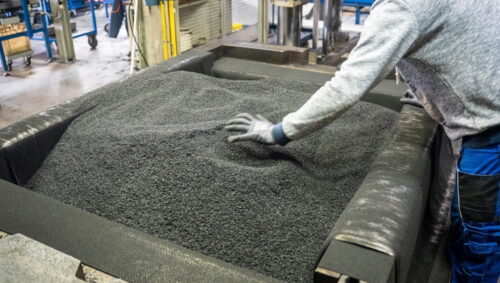
For level crossings, it is not just the surface that matters. The entire composite material is crucial. Joining technology, elasticity, and load-bearing capacity collectively determine how durably a system performs in service. The relevance of the material composition becomes particularly apparent under real operating conditions. Level crossings are constantly exposed to cyclic loading, moisture, dirt, and temperature fluctuations over long periods of time. Therefore, it is not just the raw material that matters, but above all how the core, surface layer, and joining technology interact under real-world conditions.
How Vulcanisation Differs from Adhesive Bonding
The fundamental difference between vulcanisation and adhesive bonding lies in how the material components are joined. That is the key technical difference between the two methods.
With vulcanisation, the rubber components are chemically cross-linked under heat and pressure. The resulting connection forms an integral part of the rubber structure rather than a separate interface between the materials.
With adhesive bonding, the material components are joined by an adhesive or bonding layer at the interface between the materials. The joining layer therefore forms a distinct part of the composite structure.
In adhesive or polyurethane-bonded solutions, the material components are held together by a bonding layer. This layer provides the adhesive bond between the components.
Under dynamic loading, exposure to moisture and temperature fluctuations, the long-term behaviour of such joints may differ from that of a fully cross-linked rubber structure. Adhesively bonded and polyurethane-bonded systems therefore rely on a fundamentally different joining principle.
KRAIBURG STRAIL relies on vulcanised rubber components. In this process, the material components are chemically cross-linked. The connection is formed not merely at the material interface, but throughout the material structure.
The difference can be described simply as follows:
- Vulcanisation: chemical cross-linking of rubber components
- Adhesive Bonding: joining of components through an adhesive or bonding layer
- Vulcanised structure: the connection is integrated into the rubber structure
- Bonded structure: the connection is formed at the interface between the materials
Material Composition of STRAIL Level Crossings: Recycled Core and Virgin Rubber Surface Layer
KRAIBURG STRAIL combines recycled rubber material in the core with a specially formulated virgin rubber surface layer. This results in a material structure that combines technical performance with efficient use of resources.
In STRAIL system solutions for level crossings, the material composition is tailored to load-bearing capacity, surface properties, and the intended application. The core of STRAIL rubber panels is always made of recycled rubber. The outer surface layer consists of virgin rubber and is tailored to the requirements of level crossings. These include load-bearing capacity, surface properties, and resistance to environmental factors.
It is precisely this structure that is important for the technical evaluation. Vulcanisation ensures that the composite material is not only held together mechanically, but also functions as a rubber structure.
The design combines several technical requirements:
- Recycled rubber at the core for a resource-efficient material base
- A virgin rubber surface layer for a functional surface and dimensionally stable geometry
- Vulcanised composite material for a high-strength connection
- Elastic behaviour to absorb dynamic loads
- Durable surface for use at level crossings
The result is a panel whose properties are not derived solely from the individual raw materials, but from the interaction between the core, the surface layer, and the vulcanisation process.
Dynamic Loading, Aging, and Environmental Factors
Level crossings are constantly exposed to dynamic loads, moisture, and temperature fluctuations. It is precisely this combination that places high demands on the material composition and joining technology of a level crossing system.
During operation, various forces act simultaneously on the transition surface. Road vehicles generate compressive and shear forces, the track area moves under load, and environmental conditions such as frost, meltwater and road salt, have a continuous effect on the surface and the composite material. Added to this are moisture, contamination, and repeated load cycles over long periods of time.
For the composite material, this means that it must not only be resistant to weathering but also be able to accommodate all movements without losing its internal stability. This is precisely where different joining technologies differ. While vulcanisation creates a chemically cross-linked rubber structure, adhesive or polyurethane-bonded systems rely more heavily on a bonding or adhesive layer. The key question is whether the core, surface layer, and joining technology will continue to function together reliably under real-world operating conditions, or whether aging, thermal movement, and dynamic loads will alter the bond over the course of use.
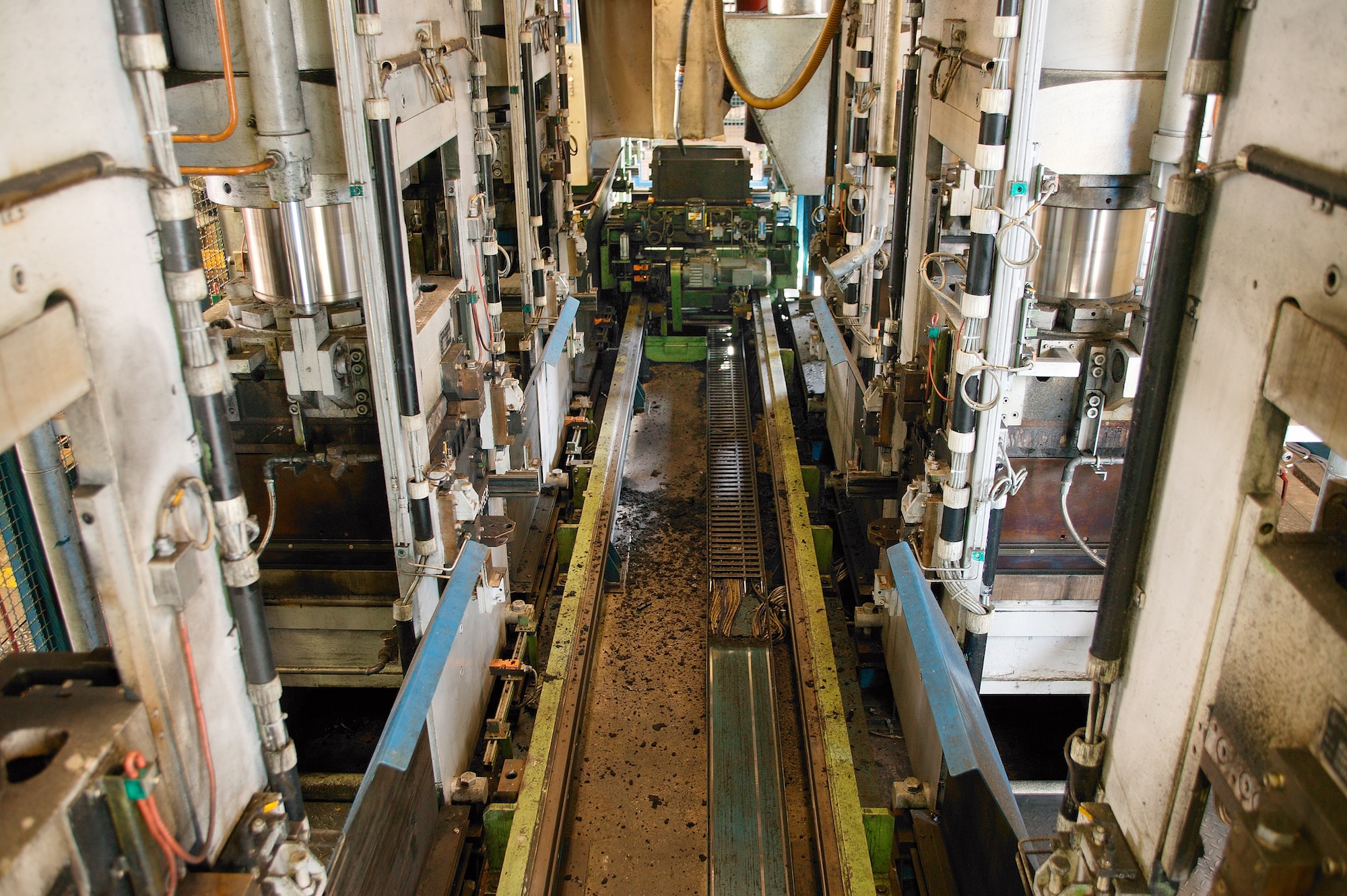
For STRAIL level crossings, vulcanisation is part of an overall system concept that combines the rubber material, panel design, joining technology, surface structure and mechanical stabilisation. For operators, this means that the joining technology should always be assessed in the context of the application, loads and maintenance strategy. This modular design can be crucial when renovating existing level crossings. Individual components can be selectively replaced or adjusted without having to completely replace the entire crossing. This allows for more flexible construction processes and better control over disruptions to adjacent areas.
For STRAIL level crossings, vulcanisation is part of an overall system concept that combines the rubber material, panel design, joining technology, surface structure and mechanical stabilisation. For operators, this means that the joining technology should always be assessed in the context of the application, loads and maintenance strategy.
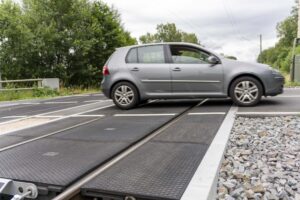
When refurbishing existing level crossings, this modular design can be a key advantage. Individual components can be selectively replaced or adapted without having to completely renew the entire crossing. This provides greater flexibility during construction and allows work affecting adjacent areas to be better controlled.
Fracture Behaviour and Operational Safety
The fracture behaviour of a level crossing system is relevant to safety because damage to the crossing surface can directly affect operations. Cracks, delamination or missing sections can affect the safe passage of road traffic and require additional maintenance measures.
How a system behaves under overload or repeated dynamic loading depends largely on its material structure. An elastic, vulcanised rubber structure can absorb loads and accommodate deformation within the composite material. In systems that rely on adhesive or bonding layers, stresses are transferred through the respective bonding interface.
For operators, it is therefore important to consider not only whether a level crossing system can withstand loads when new, but also how it behaves over its service life. Signs of aging are not limited to the surface
What matters is how stable the composite material remains over the long term under dynamic loading, moisture and temperature fluctuations, and how any damage that occurs during operation develops over time. Vulcanisation and adhesive bonding create fundamentally different material structures and can therefore result in different aging and fracture behaviour.
Technical Specifications of Vulcanised STRAIL Level Crossings
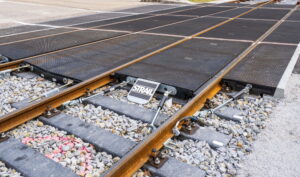
Vulcanised STRAIL level crossings combine elastic rubber components with a coordinated panel design.
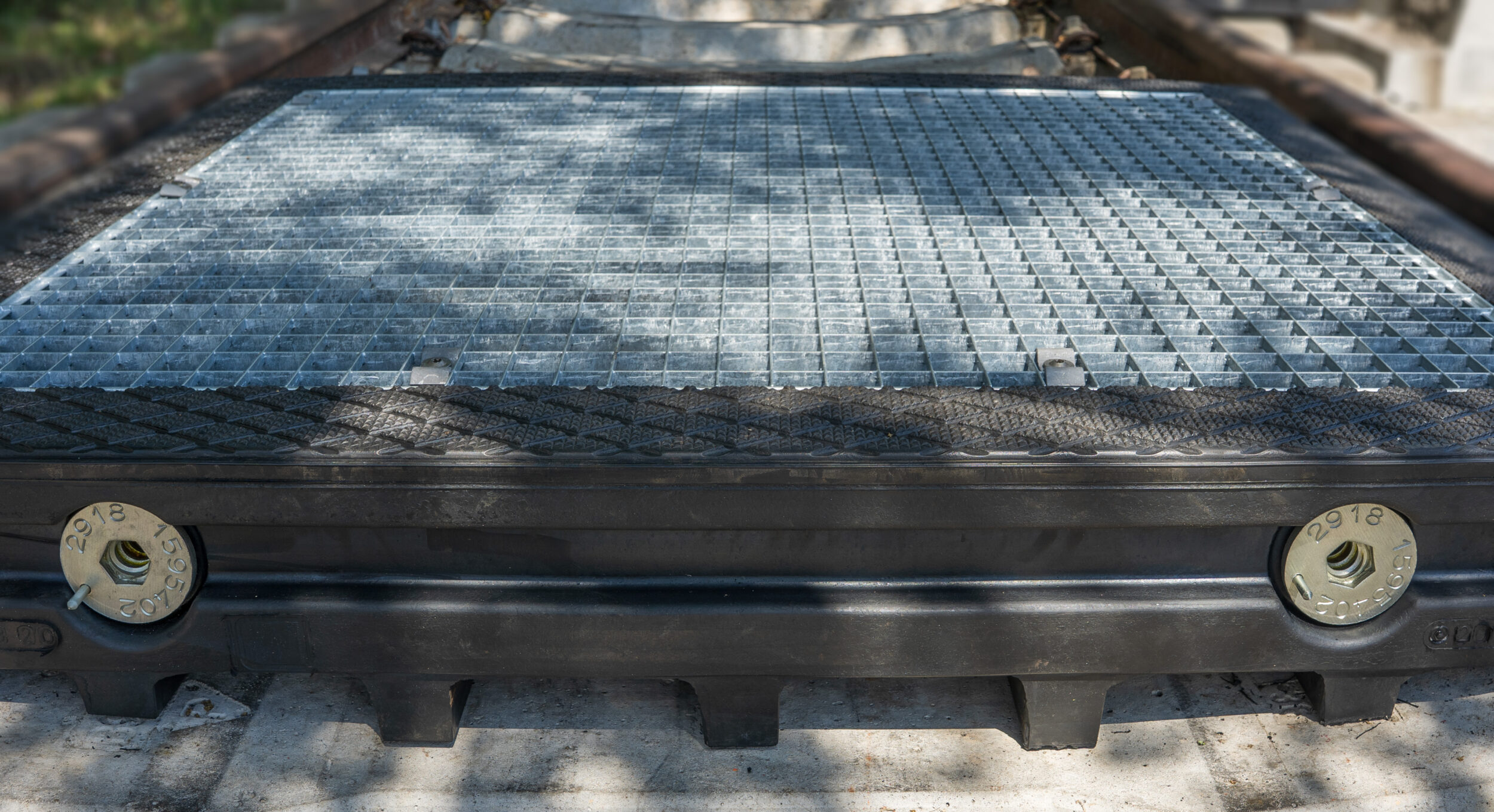
In addition to the material itself, fasteners and other system components contribute to the stability of the level crossing. The fully vulcanised rubber components form the basis of the material structure. The rubber components are chemically cross-linked so that the resulting connection becomes an integral part of the material structure. This gives the composite its elastic behaviour under dynamic loading and allows the panels to accommodate movements in the track area without losing their structural stability.
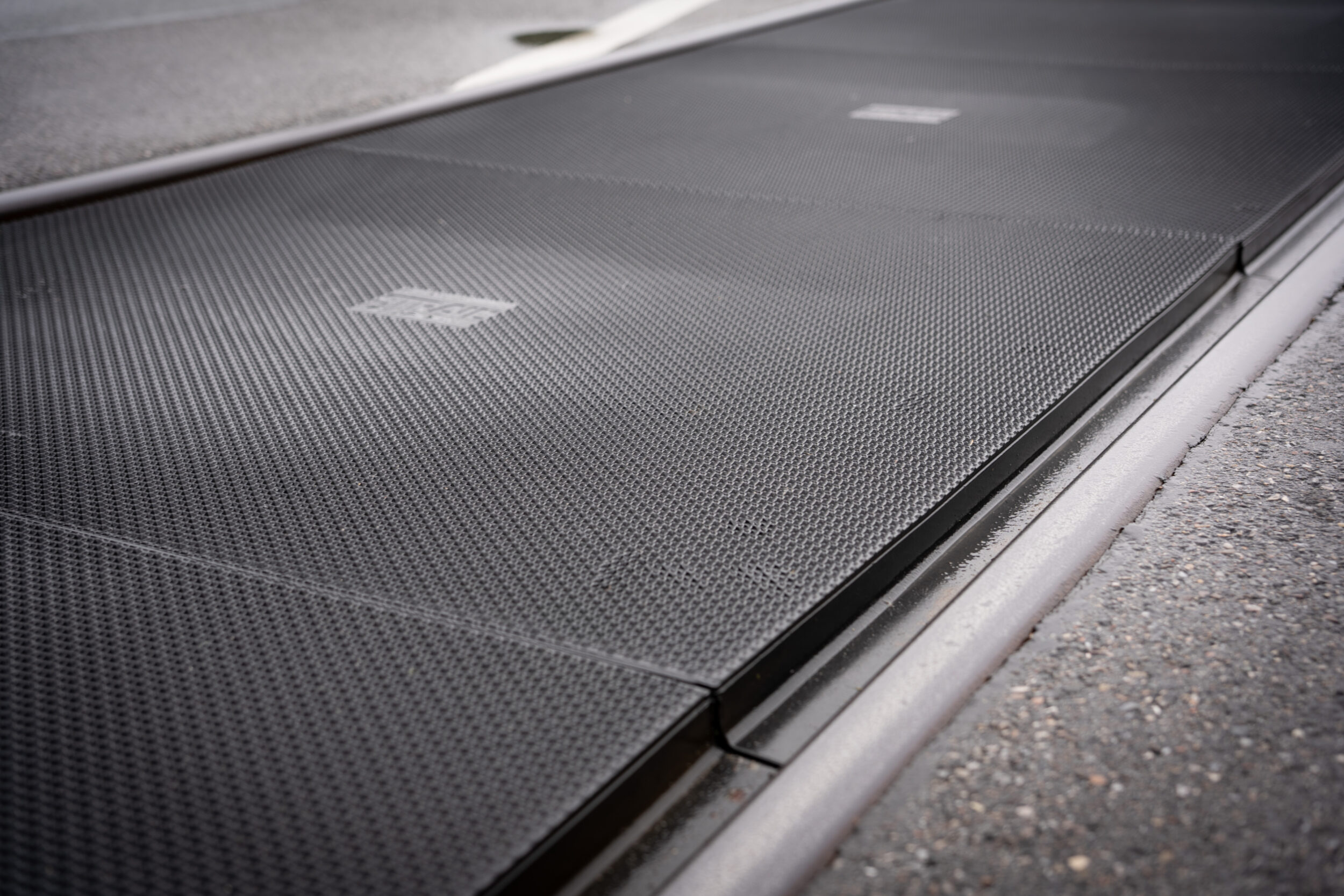
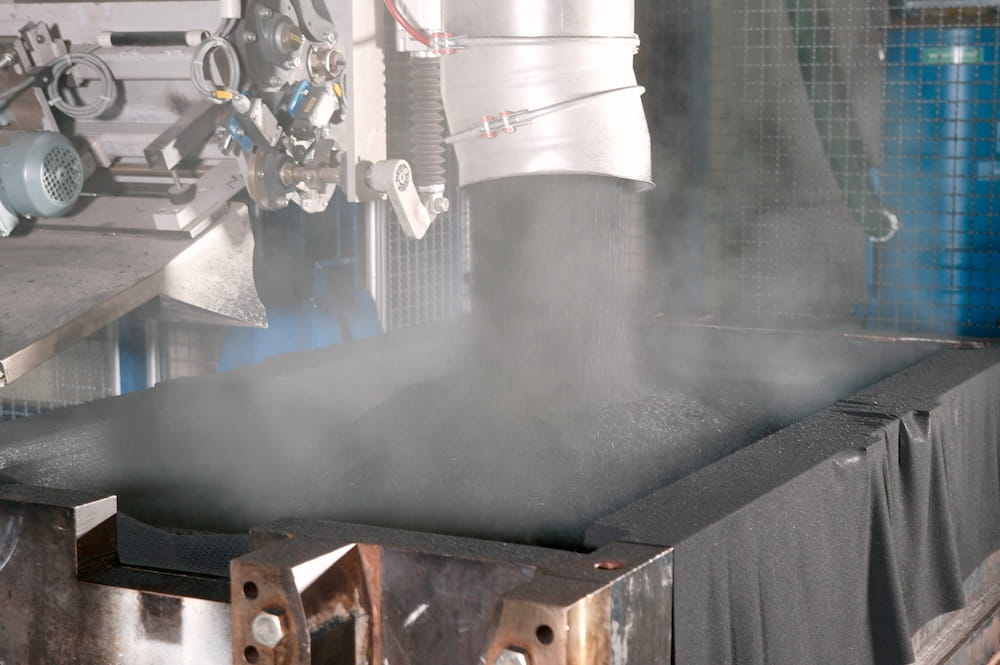
The material structure combines a recycled rubber core with a virgin rubber surface layer. The core is processed so that it can be incorporated into the vulcanisation process. The surface layer is designed to meet the requirements for surface properties, load-bearing capacity and weather resistance. Vulcanised corundum (link to “Blog: Slip Resistance at Level Crossings”) provides lasting traction, including as the surface wears over time.
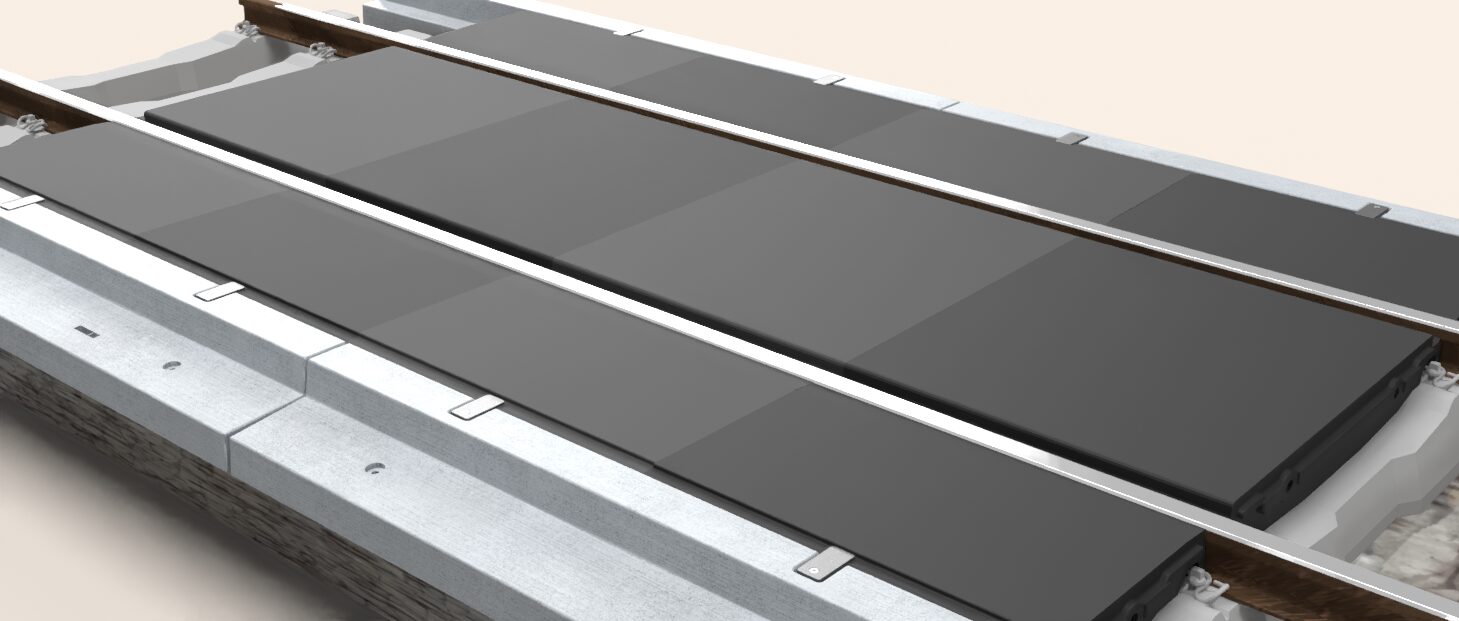
Tongue-and-groove joints between adjacent panels and a tensioning system create a continuous, level crossing surface without significant height differences between the panels. This complements the material structure through the mechanical design of the system. Together, these features form an integrated system in which the material, joining technology and surface structure work together to meet the requirements of a level crossing exposed to continuous loading.
Joining Technologies:
What Operators Should Check
When it comes to level crossing systems, operators should pay attention not only to the surface but also to the composite material. Especially in refurbishment, new construction, or long-term maintenance projects, the joining technology influences the technical evaluation of a system.
Key points to check include:
- How are the material components joined together?
- Is the connection based on vulcanisation or on an adhesive layer?
- How does the system behave under dynamic loading?
- What role do moisture and temperature fluctuations play?
- How should the fracture or aging behaviour be assessed?
- What kind of experience has been gained from operating the system?
- How does the material composition align with the expected traffic volume?
These questions are not a substitute for a technical project review. However, they help you evaluate different systems more objectively and not just compare them based on appearance, price, or installation time.
Especially on heavily trafficked routes, the effort involved has a direct impact on day-to-day operations. The longer the removal, inspection, and reinstallation take, the greater the impact on rail traffic, road connections, and construction site logistics.
Technical Classification: Recycling and Performance
Recycled materials and technical performance are not mutually exclusive in level crossing systems, provided that the composite material is properly prepared and processed. What matters is not just the origin of the material, but how it is processed within the overall system.
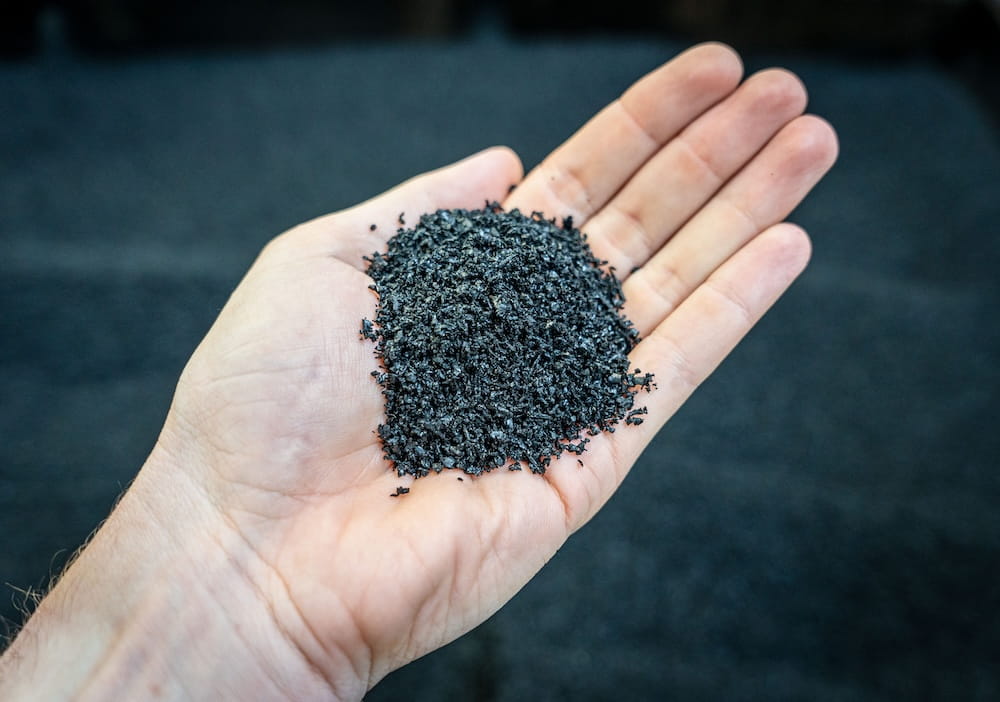
At KRAIBURG STRAIL, recycled rubber is combined with a virgin rubber surface layer. The special processing of the recycled rubber allows it to be incorporated into the vulcanisation process. This combines the benefits of resource-efficient material use with the mechanical properties of vulcanised rubber.
This classification is important for operators because recycled materials can be used in a wide variety of ways. The key factor is whether the finished material meets the requirements for strength, aging resistance, and operational safety.
Conclusion on Vulcanisation vs. Ahesive Bonding
Vulcanisation and adhesive bonding differ fundamentally in the way material components are joined. While adhesive or polyurethane-bonded systems rely on an adhesive or bonding layer, vulcanisation results in a chemically cross-linked rubber structure.
In STRAIL level crossings, this fastening technology is a key component of the overall system. It enhances the load-bearing capacity of the panels, their elastic behaviour under dynamic loads, and their long-term performance in the level crossing.
For operators, this means that when evaluating a level crossing system, one should not only consider installation, surface finish, and price. The durability of the connections between the material components is also crucial.
Well-informed technical decisions start with a solid understanding of the system architecture.
KRAIBURG STRAIL supports infrastructure operators, planners, and construction companies in the technical evaluation of material composition and jointing technology for STRAIL level crossings.
Slip Resistance at Level Crossings
Refurbishing Level Crossings