Level Crossing Systems
Technology, Safety and Installation
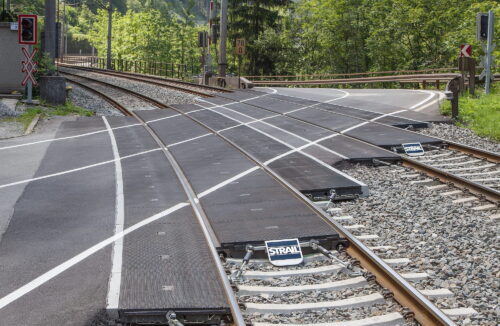
Level crossing systems connect road and rail and must withstand high loads safely and reliably over the long term while requiring minimal maintenance.
Level crossings bring together different types of traffic, dynamic loads and changing environmental conditions. This places high demands on system design, materials and the installation process.
Modern level crossing systems, such as those developed by KRAIBURG STRAIL, address these requirements not through individual components, but through an integrated system approach. The key lies in how all elements work together, from load distribution to surface structure. Only by considering the system as a whole can loads be distributed in a controlled manner, maintenance requirements reduced and long-term stability and reliability achieved.
Table of Contents
About the author
Author:
Supported by the KRAIBURG STRAIL Application Engineering and Installation Supervision teams. The content is based on technical documentation and practical experience in level crossing construction.
Technical Requirements for Modern Level Crossing Systems
Level crossing systems must withstand dynamic loads from both rail and road traffic and remain functional under all weather conditions. Level crossings differ fundamentally from other areas of track construction. While track infrastructure is primarily designed to accommodate rail traffic loads, the crossing area is additionally subjected to forces generated by road traffic. This creates complex load scenarios. These include braking and acceleration, as well as the position of the road relative to the track, for example at dips and crests or where vehicles turn through curves.
At the same time, level crossings must function reliably under a wide range of conditions. Weather conditions such as rain, frost and heat act directly on the materials and system design. Particularly under high traffic loads, it becomes apparent whether a system remains stable over the long term or begins to show signs of premature wear.
Typical requirements include:
- Even load distribution between road and track
- Accommodation of dynamic loads and movements
- Safe passage under all weather conditions
- Long-term functionality even under intensive use
System solutions such as STRAIL level crossings are designed to address these requirements and to distribute and accommodate the different loads acting in the crossing area in a controlled manner.
System Solutions at a Glance
Level crossing systems can only function reliably when all components are designed to work together as an integrated system.
A modern level crossing is more than a collection of individual components; it is based on an integrated system approach. Systems such as those from KRAIBURG STRAIL combine components specifically developed for use in the crossing area and designed to work together as a coordinated system.
Such a system typically includes:
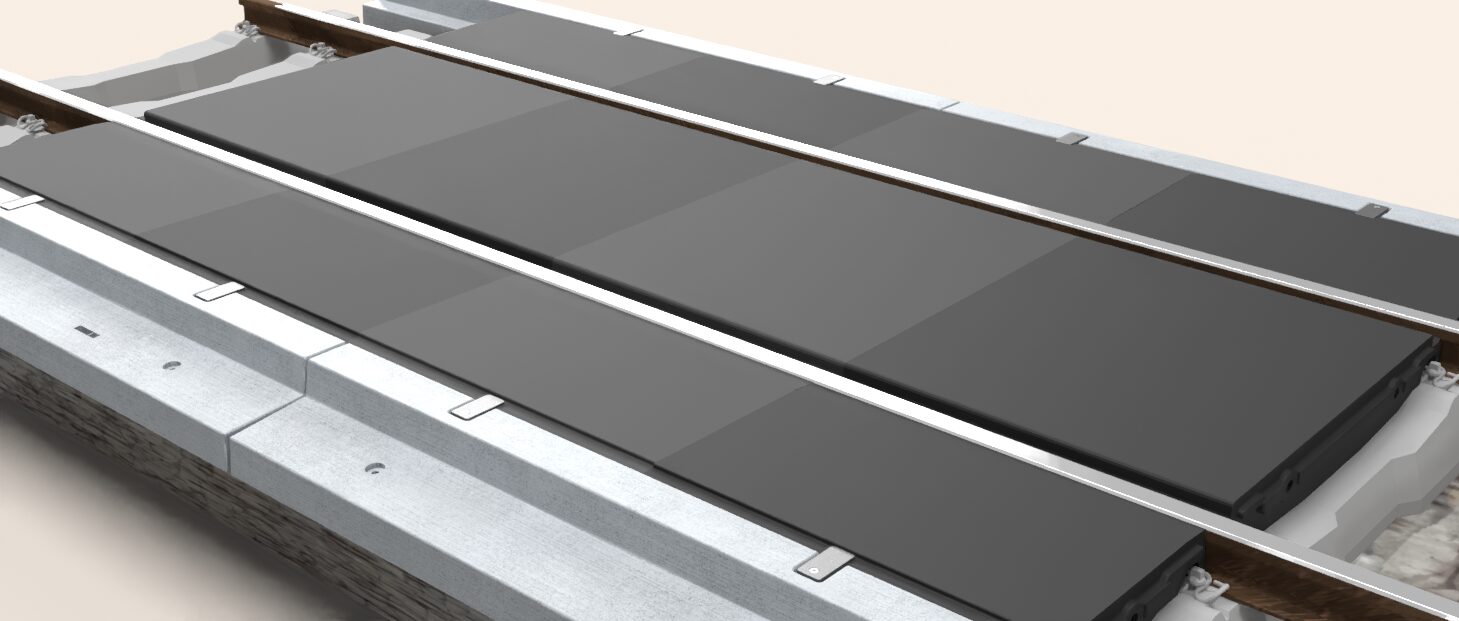
- Inner and outer panels for supporting and distributing loads
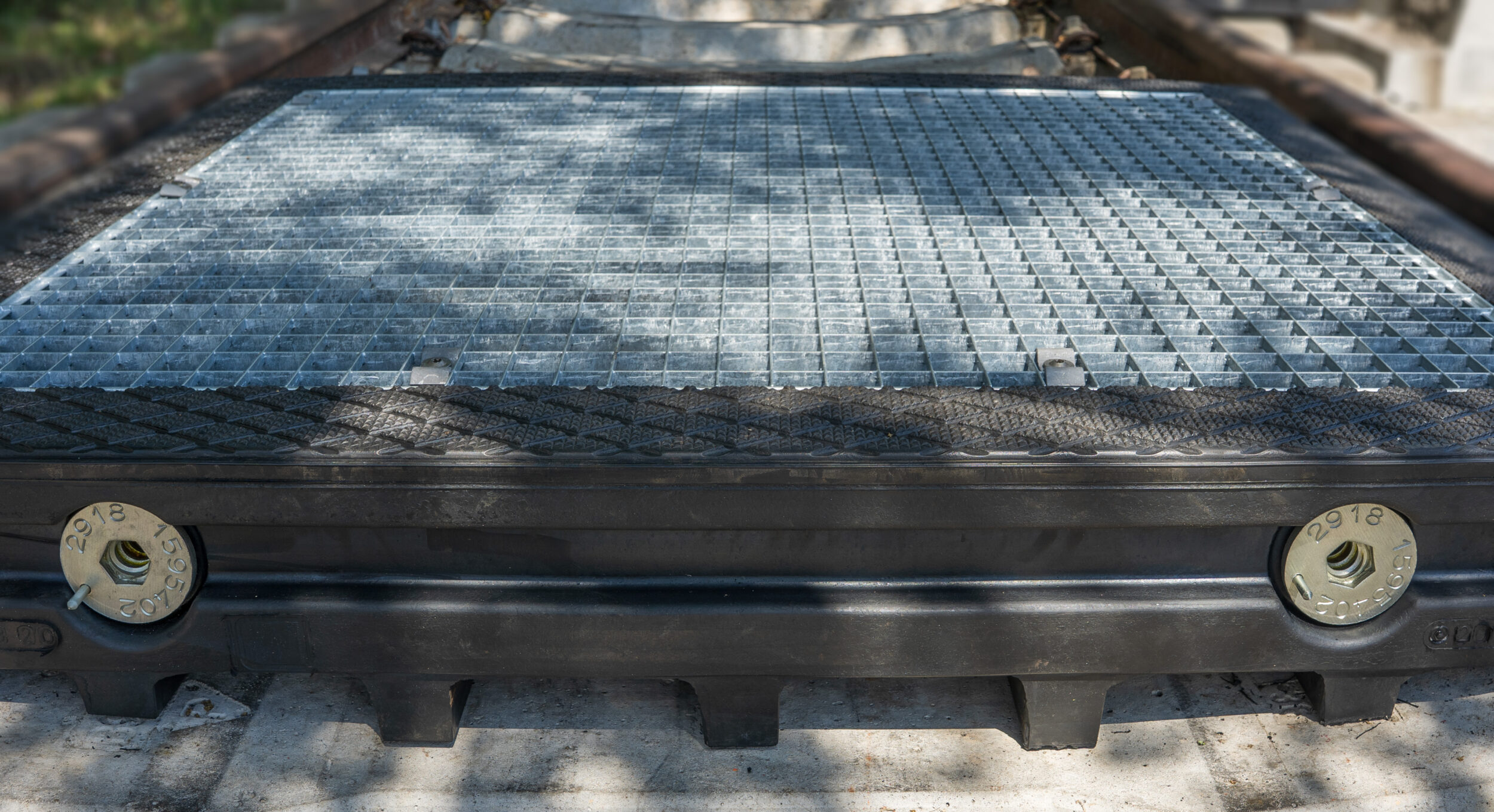
- Tensioning and connecting elements for long-term stability
- Edge elements such as kerbstones for integration into the road environment
- Structural elements for additional functions
The interaction between these components is crucial. It determines how loads are distributed, how movements are accommodated and how the overall system performs over its service life. A well-designed system approach reduces localised loads and helps protect both the crossing structure and the substructure.
Another key advantage of such systems is their adaptability. Different installation conditions, traffic loads and environmental conditions can be addressed through appropriately selected system components. This creates a solution that is not only technically appropriate, but also supports economical long-term operation.
Installation in Existing Infrastructure
The installation of level crossing systems often takes place under time pressure and requires short track possession times as well as fast and flexible installation.
Der Einbauablauf spielt beim Bahnübergang eine zentrale Rolle. In vielen Fällen müssen Übergänge unter laufendem Betrieb oder mit stark eingeschränkten Sperrzeiten saniert oder neu gebaut werden. Gleichzeitig sind die vorhandenen Gegebenheiten im Bestand oft nicht ideal und erfordern flexible Lösungen.
Key requirements during the installation process are:
- Short track possession times
- Fast installation and removal
- Adaptation to the existing sleeper layout
- Integration into existing road construction
Modular systems, such as those manufactured by KRAIBURG STRAIL, help meet these requirements efficiently.ed efficiently. Individual components can be selectively replaced or adapted without having to replace the entire crossing. This can reduce construction times and minimise interventions in the existing infrastructure.
Safety and Functionality in Service
The operational safety of a level crossing depends on the surface, system design and joining technology.
Several factors must work together reliably over the long term to ensure the operational safety of a level crossing. This involves not only mechanical stability, but also the functional performance of the surface and the joining technology.
Key aspects include:
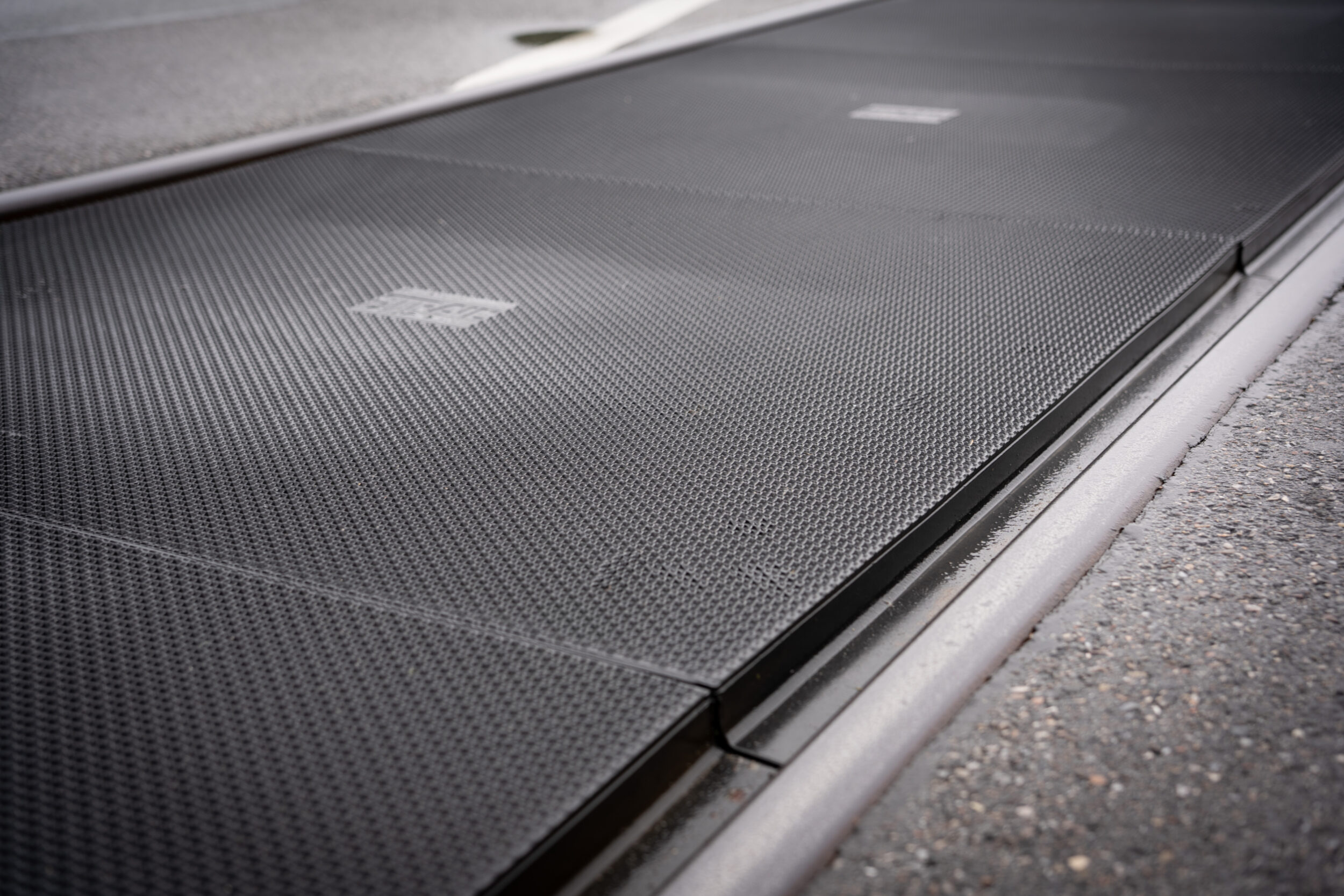
- Slip-resistant surface for vehicles and pedestrians
- Reliable joining of the system components
- Level, safe and continuous crossing surface
- Reliable performance in wet and freezing conditions
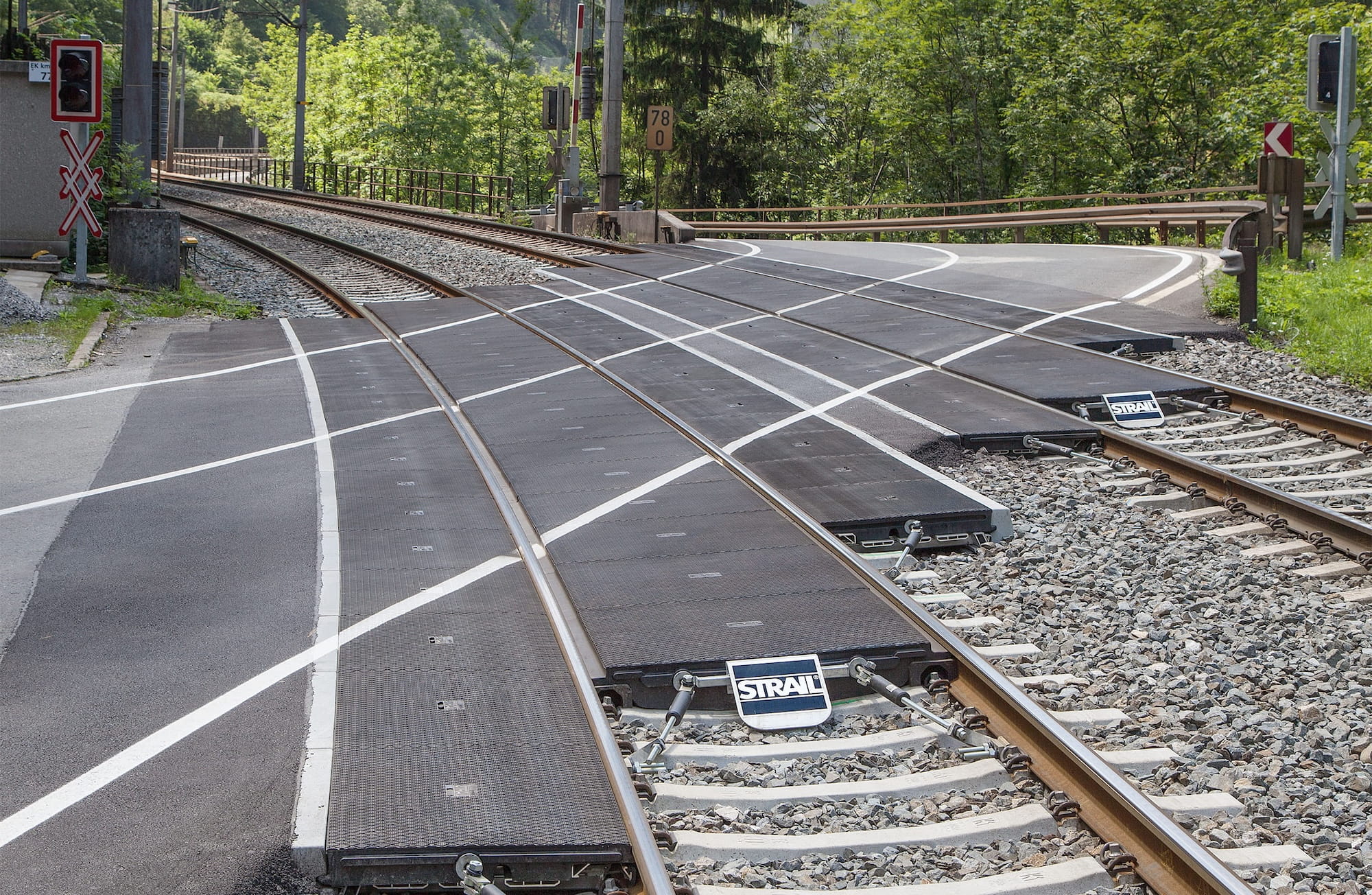
With STRAIL systems, the surface structure is specifically designed to provide a safe passage even under adverse conditions. At the same time, the connection between the individual components contributes to the long-term stability of the overall construction, allowing it to maintain its functionality even under high loads.
Material Behaviour and Load-Bearing Capacity
The material properties of a level crossing system have a major influence on its service life, load-bearing capacity and maintenance requirements.
The choice of material is a key factor in the performance of a level crossing. It determines how effectively the system can withstand loads and how reliably it maintains its functionality over the long term.
KRAIBURG STRAIL uses materials specifically selected to meet the requirements of the crossing area. A key characteristic is elastic behaviour, which allows the system to accommodate movement without compromising its stability.
Key features include:
- Elastic absorption of dynamic loads
- Resistance to temperature fluctuations
- High resistance to mechanical wear
- Long-term dimensional stability
These properties help reduce load peaks and distribute forces more evenly. This protects not only the system itself, but also the substructure and adjacent components.
Vulcanisation and Adhesive Bonding
The joining technology used has a significant influence on the load-bearing capacity and service life of a level crossing system.
Over many years, level crossing systems are exposed to dynamic loads, moisture, temperature fluctuations and mechanical wear. It is therefore not only important which materials are used, but also how they are connected to one another.
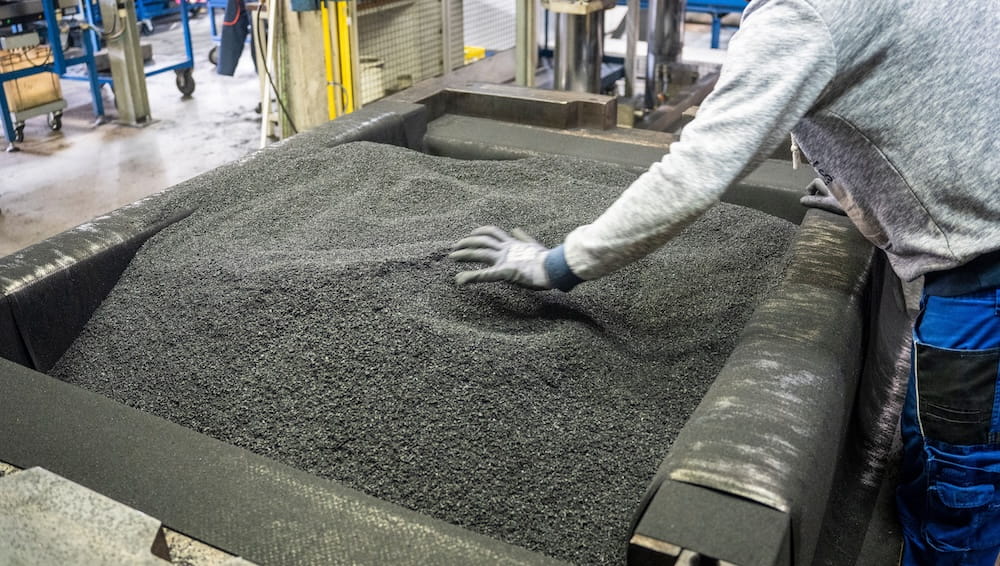
KRAIBURG STRAIL uses fully vulcanised rubber components in its level crossing systems. During vulcanisation, the material components are chemically cross-linked under heat and pressure. This creates a load-bearing material structure in which the resulting connection becomes an integral part of the material structure.
Key advantages of this connection technology include:
- An integral connection within the material structure
- Elastic behaviour under dynamic loading
- High resistance to weathering and environmental influences
- Long-term stability of the material structure
Joining technology is therefore an integral part of overall system performance. It influences how a level crossing system accommodates and distributes loads, how the material behaves over its service life and how reliably the system maintains its functionality over the long term.
Learn more about:
Vulcanization vs. Adhesive Bonding.
Typical Applications
Level crossing systems must be able to adapt flexibly to different traffic loads and installation conditions.
Level crossing systems are used in a wide range of applications, each with its own specific requirements. Depending on traffic volumes, the surrounding environment and the intended use, systems need to be adapted accordingly.
Typical applications include:
- Heavily trafficked routes within the public road network
- Industrial and site access roads with high traffic loads
- Branch lines with lower traffic volumes
- Pedestrian and cyclist crossings
STRAIL systems are designed to be used in these different scenarios and adapted to the respective requirements.
Real-World Example
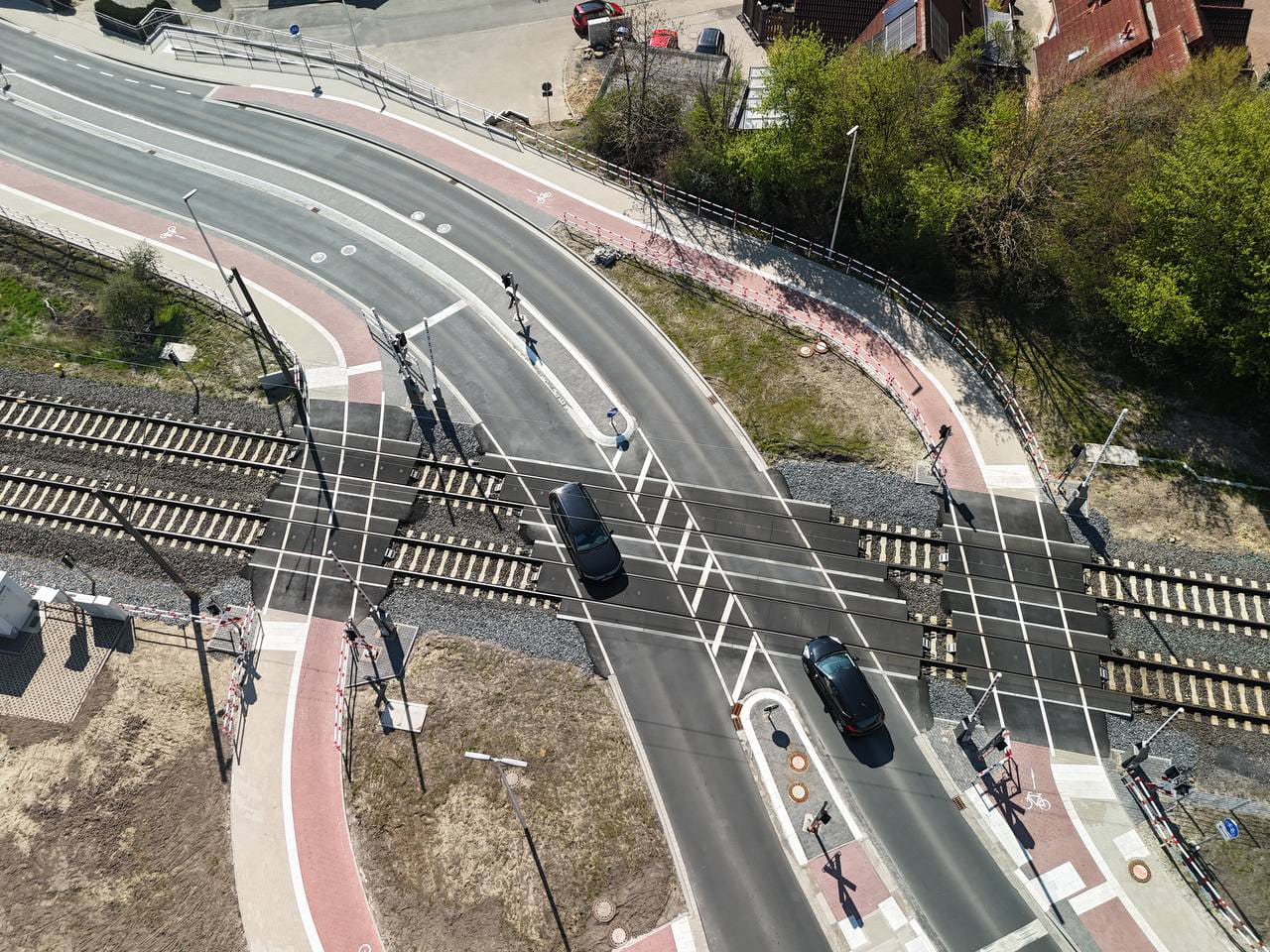
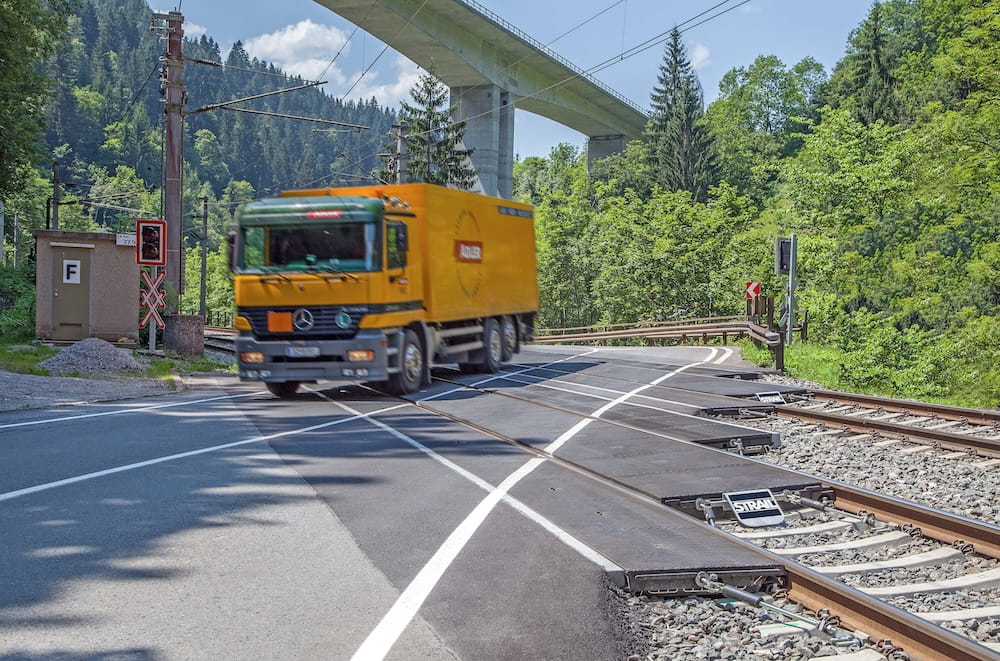
The practical application of modern level crossing systems is demonstrated by a project in Ibbenbüren completed in 2024. A level crossing was redesigned using several STRAIL systems to improve safety for road traffic, cyclists and pedestrians. The project was carried out at a location previously classified as a high-accident area and comprised a total of six crossing points. Different system solutions were used to meet the specific requirements of each application:
- Two road crossings with strail inner panels and ponti outer panels
- Four separate crossings for pedestrians and cyclists using pede and ponti
- Improved traffic flow through separate lanes
- Track crossings at an almost perpendicular angle for improved visibility
- Increased safety for all road users through tailored crossing solutions
More information about the project:
A safe level crossing for all road users
Conclusion: Level Crossing Systems
Level crossing systems combine coordinated system design, suitable materials and efficient installation into a durable, low-maintenance overall solution.
Level crossing systems must reliably meet a wide range of technical requirements over the long term. Level crossings are complex technical systems in which safety, installation, material behaviour and functionality are closely interconnected. What matters is not the individual component, but how all components work together as part of an integrated system.
System solutions such as STRAIL level crossings demonstrate how these requirements can be addressed through a well-designed combination of materials, system components and an integrated installation concept. This creates durable, low-maintenance solutions for a wide range of applications.
Key benefits include:
- Even load distribution in the crossing area
- High operational safety under all weather conditions
- Modular installation for reduced track possession times
- Durable materials with low maintenance requirements
- Adaptable system solutions for different applications
This combination makes level crossing systems an important element of reliable and cost-effective rail infrastructure.
Choosing the right level crossing solution starts with a sound technical assessment.
KRAIBURG STRAIL supports infrastructure operators, planners and construction companies in selecting suitable level crossing systems and integrating them into existing road and rail infrastructure.
Slip Resistance at Level Crossings
Vulcanisation vs. Adhesive Bonding