Refurbishing Level Crossings
How Existing Conditions, System Design and Track Possession Times Shape the Construction Process
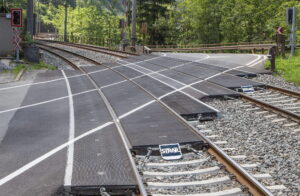
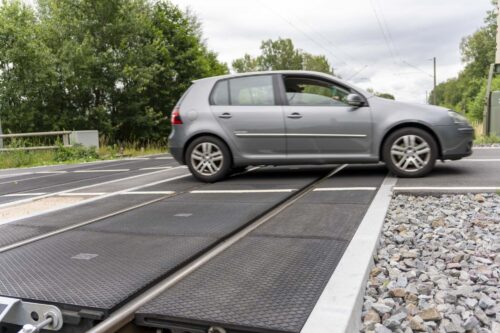
Refurbishing a level crossing is one of the most demanding tasks in track construction. The condition of the existing crossing surface, the extent of contamination and the system design can significantly influence how predictably, efficiently and cost-effectively the refurbishment can be carried out.
Level crossing refurbishment is usually carried out during defined track possession periods. The track and/or road may be fully closed for the duration of the works. Alternatively, work may be scheduled for specific periods when no trains are operating, for example at night. On the road side, partial closures with traffic lights may also be possible. The aim is always to keep track possession times as short as possible.
It is often only during the removal of the existing crossing system that the actual scope of work becomes apparent. The condition of the sleepers, components that have become seized in place, or additional work required in the track area can have a significant impact on the construction process.
Modern modular level crossing systems such as those from KRAIBURG STRAIL are therefore designed to make refurbishment projects more predictable and easier to carry out, even within tight time windows.
Table of Contents
About the author
Author:
Supported by the KRAIBURG STRAIL Application Engineering and Installation Supervision teams. The content is based on technical documentation and practical experience in level crossing construction.
Level Crossing Refurbishment: Why Good Planning Is Essential
Refurbishing a level crossing involves two transport infrastructures at the same time: road and rail. A level crossing brings road and rail traffic together in the same transport environment and is therefore one of the more sensitive areas of transport infrastructure.
Particularly with existing level crossings, the actual scope of work often only becomes apparent once the existing system is removed. The condition of the existing crossing surface, the extent of contamination, the available track possession times and the design of the existing system all have a significant impact on how reliably the level crossing refurbishment can be planned and carried out.
Older level crossings or crossings with significant contamination may require additional work in the track area. Only once the crossing has been opened up does it become clear whether sleepers, fastenings or adjacent components require additional work.
Typical influencing factors include:
- Condition of the existing crossing surface
- Contamination in the crossing area
- Condition of sleepers and fastenings
- Rail wear
- Removal and cleaning costs
- Available track possession time
What Factors Influence the Duration of a Refurbishment?
The duration of a level crossing refurbishment depends largely on the condition of the existing crossing surface and the track area. Refurbishment involves more than simply installing new components. It often also includes removing existing components, cleaning and preparing the existing track area.
At older level crossings, contamination, corrosion or seized components can make removal more difficult. This can result in additional work in the track area, which can affect the overall construction process.
Modular level crossing systems offer advantages here because individual components can be selectively removed, inspected and replaced. This makes the refurbishment process easier to plan and control through to reopening the crossing to traffic.
The following factors are particularly relevant to the construction time:
- Condition and contamination of the crossing
- Necessary preparatory work in the track area
- Available track possession time
- Costs for removal and reinstallation
A realistic construction schedule therefore always considers the entire process, from preparation, removal and reinstallation through to reopening the crossing to traffic.
Why Modular Level Crossing Systems Offer Advantages for Existing Level Crossings
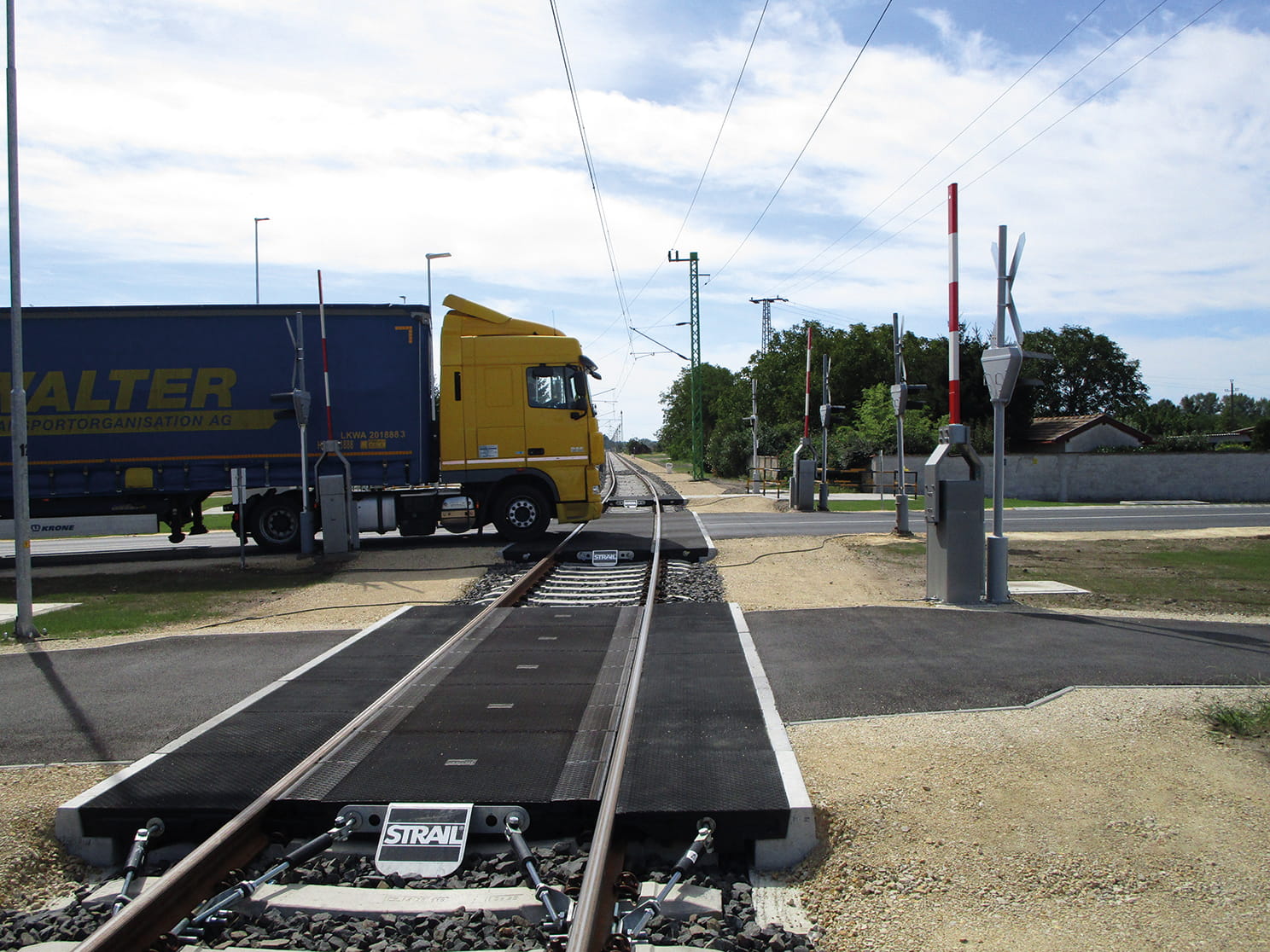
Modular level crossing systems can simplify refurbishment because individual components can be selectively removed, inspected and replaced. For existing level crossings, this is a significant advantage, as the actual site conditions often only become apparent once the crossing has been opened up.
STRAIL level crossing systems combine coordinated components such as inner panels, outer panels and connecting elements. This modular design allows individual elements to be selectively replaced or adapted without having to completely renew the entire crossing. Another advantage lies in the material itself. Elastic rubber components can accommodate dynamic movements and distribute loads differently from rigid materials, which can help reduce localised loading on adjacent areas.
Modular systems can provide the following advantages:
- Targeted replacement of individual components
- Better adaptation to existing site conditions
- More predictable construction processes
- Controlled removal and reinstallation
However, every refurbishment project depends on the specific conditions on site. Any statements regarding construction time must therefore be assessed on a project-specific basis.
Level Crossing Refurbishment: Key Factors in the Installation Process
Short track possession times require a clearly defined installation process, suitable tools and a level crossing system that allows the installation to be planned and carried out efficiently. Many refurbishment projects allow only a tight time window, often during periods of lower traffic volumes.
KRAIBURG STRAIL’s installation instructions therefore emphasise the use of suitably qualified and trained personnel, with support from STRAIL installation supervision where required. Personnel who are familiar with the systems and use the specified tools correctly can help reduce risks during the construction process.
The construction process includes not only removing the existing crossing surface, but also cleaning, inspecting and preparing the track area. Only then can the new system components be installed and the crossing reopened to traffic.
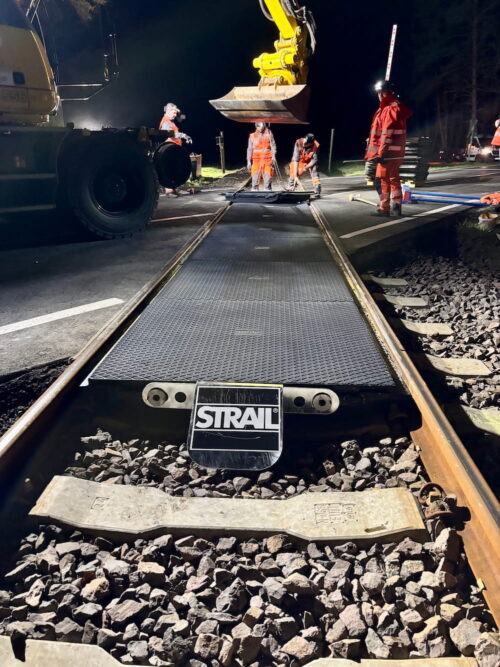
For STRAIL systems, specially designed installation tools support the installation process. Depending on the system, these may include installation levers or excavators equipped with tooth guards, allowing the panels to be positioned in a controlled manner and helping to prevent damage.
The efficiency of the process does not depend on any single step, but on the interaction between system design, tools and clearly defined installation procedures.
In existing level crossings in particular, it often becomes clear that the available track possession time is not the only factor determining the construction process. Equally important is how easily an existing system can be removed, inspected and adapted to the specific site conditions. This is where modular level crossing systems offer clear design advantages. For level crossing refurbishment, construction time is not the only consideration. The material structure, joining technology and surface performance also influence how well a level crossing system withstands operational loads, how much maintenance it requires and how reliably it continues to function over the long term.
Vulcanisation vs. Adhesive Bonding
Vulcanisation refers to the permanent chemical cross-linking of rubber components under heat and pressure. This creates a load-bearing material connection that differs fundamentally from connections based solely on adhesive bonding.
The joining technology therefore plays a key role in determining how durable and load-bearing a level crossing system remains under dynamic loading. KRAIBURG STRAIL uses fully vulcanised rubber components. During the manufacturing process, the different material components are chemically cross-linked under heat and pressure. The aim is to create a durable, load-bearing connection that remains stable even under dynamic loading in the track area.
Unlike solutions based on adhesive bonding or polyurethane bonding, vulcanisation does not rely on a separate adhesive layer between the materials. Instead, the connection becomes part of the material structure itself. This distinction is technically relevant, particularly under changing temperatures, moisture and high numbers of load cycles.
Slip Resistance and Surface Structure
The slip resistance of a level crossing surface results from the interaction between the rubber material, surface geometry and drainage. Slip resistance describes the ability of a surface to maintain adequate grip under wet or contaminated conditions. In STRAIL systems, specially designed surface structures and corundum embedded in the rubber through vulcanisation contribute to the slip-resistant properties. The aim is to provide a surface that maintains its grip over the long term, including in wet and winter conditions.
In railway applications, surface grip can be assessed using the SRT value, which is determined in accordance with DIN EN 13036-4 and the relevant TP Griff test procedures. Such test methods are used to provide a consistent and reproducible assessment of the slip resistance of traffic surfaces. The SRT value of STRAIL systems is regularly independently tested and verified by LGA in accordance with DIN EN 13036-4:2011-12.
The impact of these technical properties on the construction process becomes particularly apparent when refurbishing existing level crossings. In such projects, the construction process is influenced not only by the material and system design, but also by site accessibility, the effort involved in removing the existing system and the actual site conditions. In the refurbishment of existing level crossings, modular design can offer a significant advantage. Individual components can be selectively replaced or adapted without having to renew the entire crossing. This makes the construction process more flexible and makes it easier to control the impact of the works on adjacent areas.
Typical Factors Influencing Level Crossing Refurbishment
The actual duration of a level crossing refurbishment depends on more than just the installation of the new system. The following factors are particularly relevant:
- Condition and contamination of the existing crossing surface
- Effort and costs involved in removing existing components
- Condition of sleepers and fastenings
- Rail wear
- Available track possession times
- Site logistics and access for materials
- Necessary cleaning and preparatory work in the track area
The actual scope of work in the existing infrastructure often only becomes apparent once the crossing has been opened up.
Technical Features of Modular STRAIL Level Crossings
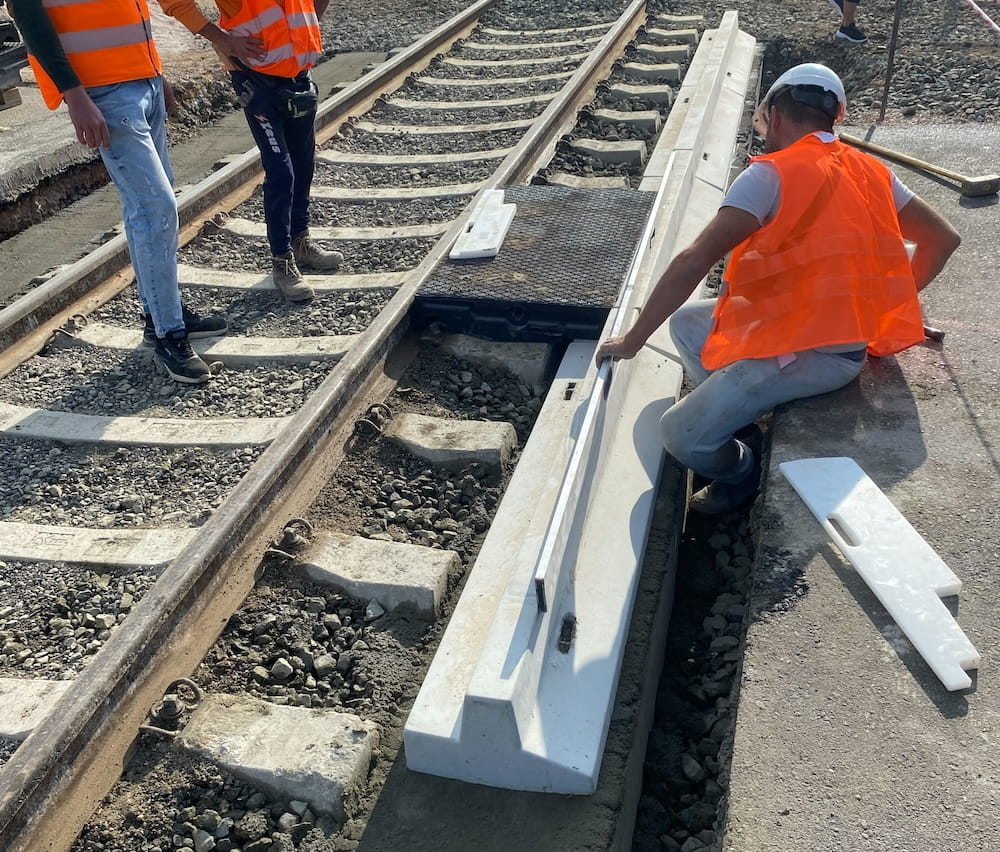
Modular level crossing systems consist of individual components that can be replaced and adapted to different installation conditions. These include inner panels, outer panels, connecting elements and road connection and edge solutions.
Key features include:
- Tongue-and-groove connections between adjacent panels
- A lock-tight tie rod system for a continuous crossing surface without height differences between panels
- Elastic rubber components for accommodating dynamic loads
- Individually replaceable panels for refurbishment and maintenance
This design allows individual components to be selectively inspected during removal and replaced if necessary.
Removal, Inspection and Reinstallation of Individual Components
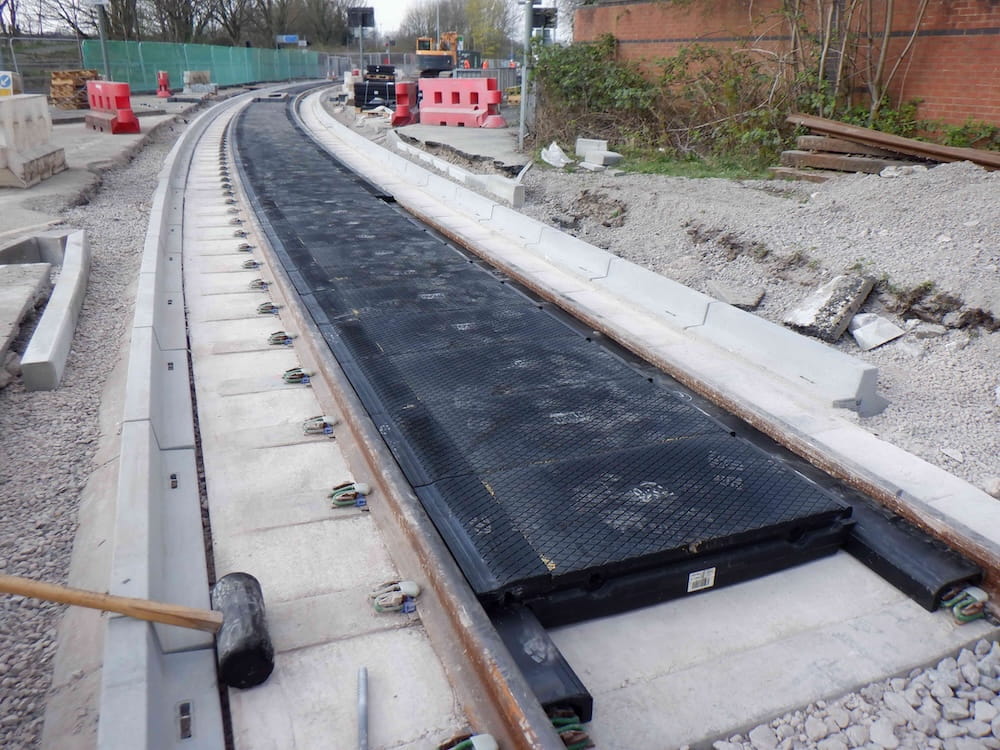
A more efficient refurbishment process is possible when components can be selectively removed, inspected and, where appropriate, reinstalled. Existing level crossings often differ considerably in terms of age, contamination and system design. As a result, the actual scope of work can vary significantly even between crossings that appear similar.
Modular STRAIL systems offer advantages here because individual components can be removed and assessed separately. Depending on their condition, panels can be removed, inspected and, where appropriate, reinstalled. Used STRAIL panels can be returned for recycling where appropriate.
Short track possession times and a predictable construction process help minimise disruption to rail and road traffic and simplify site coordination. Whether components can actually be reused always depends on the condition of the system and the requirements of the specific project.
The Economic Importance of Short Track Possession Times
Short track possession times reduce the impact of level crossing refurbishment on rail traffic, road traffic and project costs. Delays in the construction process can affect timetables, require diversions and result in additional organisational effort.
Particularly on heavily trafficked routes or at important road crossings, the duration of a closure has a direct impact on traffic management and site coordination. This is why the predictability of refurbishment projects is a key consideration for many operators.
Based on internal experience from construction projects, current STRAIL system solutions are designed to support efficient installation, even within tight time windows. However, the actual duration of a refurbishment project always depends on the specific conditions of the project.
What factors influence the duration of a level crossing refurbishment?
- Condition of the existing crossing surface
- Contamination in the track area
- Condition of sleepers and fastenings
- Type of existing system
- Available track possession time
- Scope of the preparatory work
- Selected level crossing system
- Site logistics and material availability
Particularly on heavily trafficked routes, the effort involved can have a direct impact on ongoing operations. The longer it takes to remove, inspect and reinstall the components, the greater the impact on rail traffic, road connections and site logistics. To keep level crossing refurbishment as predictable as possible, the actual work begins well before the first component is removed. A thorough assessment of the existing conditions helps to anticipate potential delays and additional work more effectively. Whether it is a refurbishment project in an urban area, an industrial crossing or a heavily trafficked main line, the actual scope of work is usually determined by the interaction of many individual factors. The construction process, material performance and system design must therefore always be considered together.
What Should Operators Check Before Refurbishment?
Before refurbishing a level crossing, the existing site conditions should be assessed as accurately as possible. In addition to the existing level crossing panels, the surrounding track area, road connection, available track possession times and expected future traffic loads also play an important role. Particularly with existing level crossings, a detailed assessment often reveals whether additional cleaning, adjustments to the road connection or work on sleepers and fixings will be required.
Key points to check include:
- Condition of the existing level crossing panels
- Contamination as well as effort and costs involved in removal
- Condition of sleepers and fastenings
- Expected traffic loads, including heavy-duty traffic
- Available track possession times
- Drainage and road connection
This assessment does not replace detailed technical planning, but it helps provide a more reliable basis for planning the subsequent construction process.
Technical Requirements
The technical requirements for level crossings vary depending on the application, traffic loads and the infrastructure operator’s applicable standards and regulations. Relevant requirements may arise from the German Railway Construction and Operating Regulations (EBO), technical standards and specifications issued by infrastructure operators, as well as requirements relating to slip resistance and surface testing, for example in connection with TP Griff and DIN EN 13036-4:2011-12.
Choosing the Right System for Level Crossing Refurbishment
The right level crossing system must be suited to the traffic loads, installation conditions and available time window. For example, an urban level crossing presents different requirements from an industrial crossing with regular heavy-duty traffic or a branch line with lower traffic volumes.
KRAIBURG STRAIL offers a range of system solutions for different applications, including heavily trafficked crossings, industrial and plant access roads, as well as pedestrian and cyclist crossings. For refurbishment projects, the key consideration is how well the selected system can be adapted to the existing infrastructure and the planned construction process.
Typical selection criteria include:
- Traffic volume
- Heavy-duty or industrial traffic
- Existing sleeper spacing
- Slip resistance requirements
- Drainage and road connection
- Available track possession times
- Long-term maintenance strategy
Conclusion: Level Crossing Refurbishment
When planning the refurbishment of a level crossing, operators need to consider the existing infrastructure, construction process and system solution together. The key factors are not only the actual installation time, but also the effort involved in removal, contamination, track condition and the predictability of the overall construction process.
Systems such as STRAIL level crossings can offer advantages here. Their modular design and coordinated installation procedures make it easier to work within short track possession times and accommodate challenging existing conditions.
For operators, this means that a technically suitable solution can support both efficient refurbishment and the long-term operational safety and cost-effectiveness of the level crossing.
Refurbishment of a level crossing: Why good planning is crucial
Are you planning a level crossing refurbishment or would you like to find out which STRAIL system solution is best suited to your installation conditions?
Slip Resistance at Level Crossings
Vulcanisation vs. Adhesive Bonding